
Managing corporate tax compliance across Africa requires steady attention to changing local regulations. For growing businesses in Nigeria, handling the trio of Value Added Tax (VAT), Withholding Tax (WHT), and Pay As You Earn (PAYE) can quickly become a full-time operational burden.
Here is where businesses most frequently run into trouble:
1. Withholding Tax (WHT) Tracking: When paying corporate vendors, deducting the correct 5% or 10% rate is only half the battle. You also need to remit those funds on time and track WHT credit notes so you can offset them against future Corporate Income Tax (CIT) obligations. Doing this on spreadsheets almost always leads to lost tax credits.
2. Value Added Tax (VAT) Remittances: With the statutory rate at 7.5%, businesses must accurately separate input VAT (paid to registered suppliers) from output VAT (collected from clients). Missing invoices mean you end up paying more to the tax authority than you actually owe.
3. PAYE Multi-State Filings: As teams grow and hire remotely across different states, payroll tax rules diverge. Calculating remittances accurately according to each state’s internal revenue service schedules requires careful calculation.
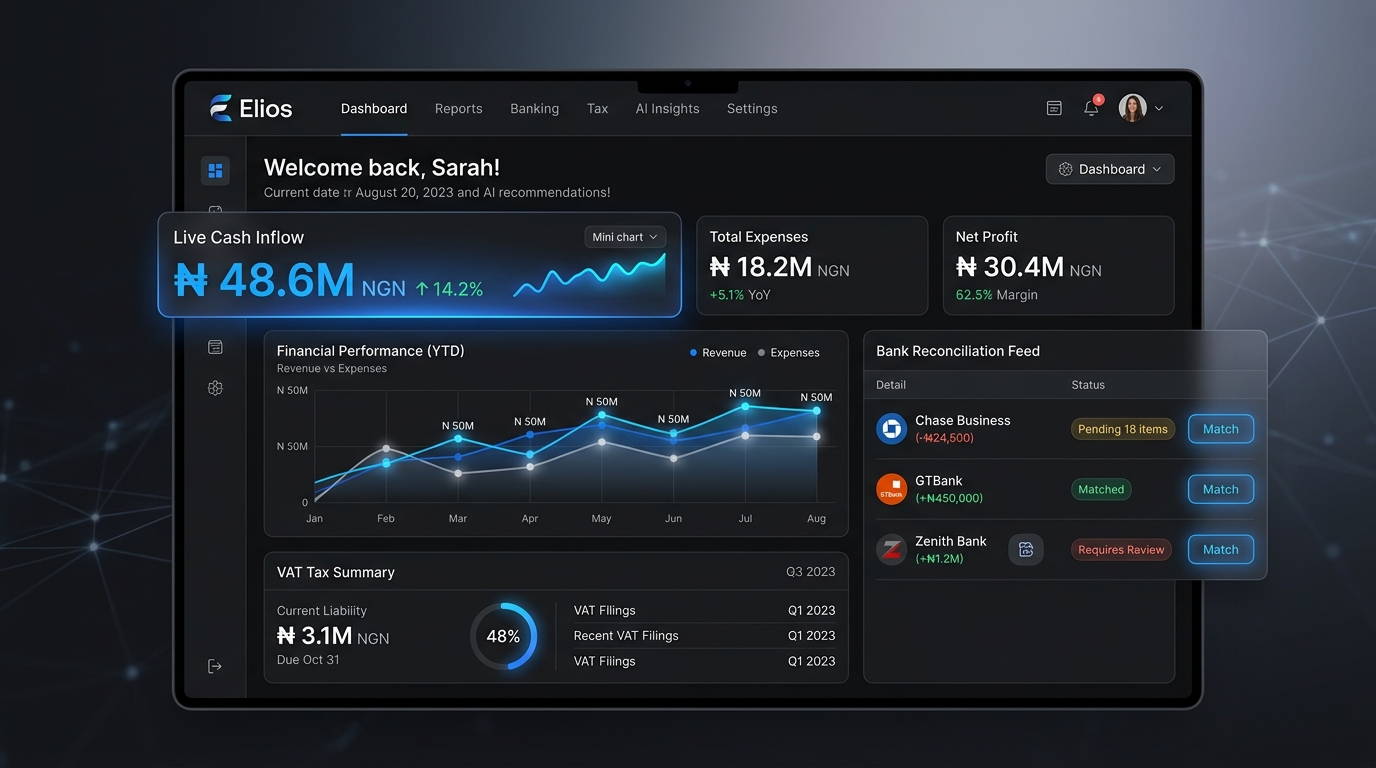
Modern accounting platforms build these rules directly into daily bookkeeping workflows. When an invoice or payroll run is processed, Elios calculates the relevant tax components automatically, updates liability accounts, and prepares filing-ready schedules. This keeps your business compliant by default, eliminating manual tax panic.